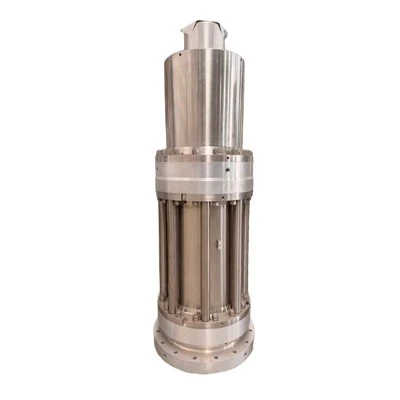
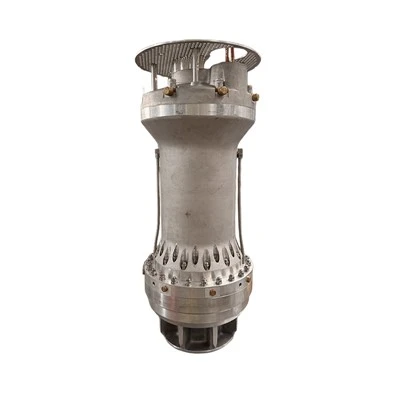
Hey there, if you’ve ever been on a ship, you know how critical every piece of equipment is—especially when it comes to moving fluids efficiently. As a Reciprocating Pump in Ship supplier, I get tons of questions from deck engineers, chief mates, and maintenance teams about figuring out how much these pumps can actually move, aka their capacity. It’s not just a random number pulled out of a manual; there’s solid science behind it, and skipping the steps can lead to headaches like overloading, inefficient operations, or even pump failure. Let’s break this down in plain terms, no fancy jargon that makes your eyes cross.
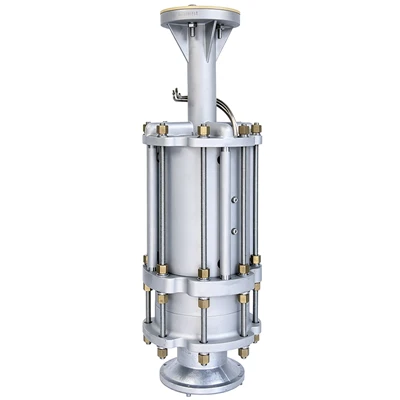
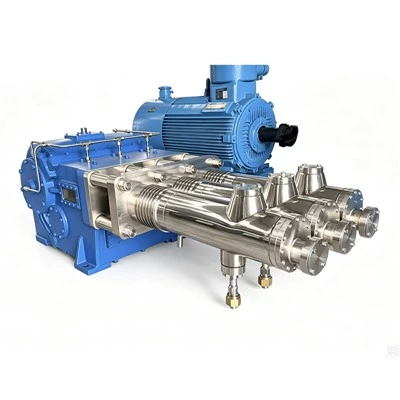
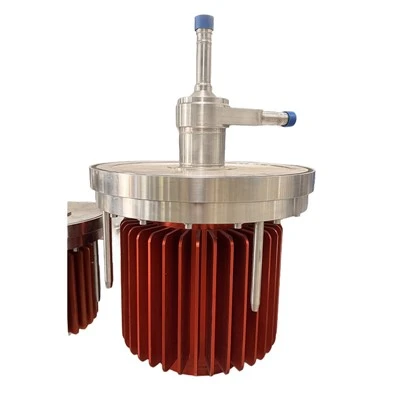
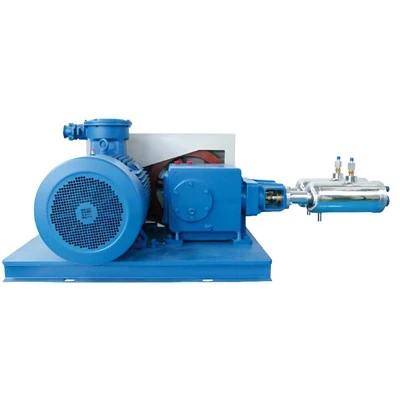
First off, let’s make sure we’re on the same page: what’s a reciprocating pump on a ship? Unlike centrifugal pumps that spin fluid around, these work by moving a piston (or plunger) back and forth in a cylinder. When the piston pulls back, it creates a vacuum that sucks fluid in; when it pushes forward, it forces that fluid out. It’s a simple design, but perfect for ship-specific jobs—like transferring fuel, pumping ballast water, or handling high-pressure stuff for cleaning or cooling. Some even handle cryogenic fluids, so if that’s your need, you should check out the Cryogenic Reciprocating Pump page on our site for specialized details.
Now, capacity is basically the volume of fluid the pump can move per unit time—usually gallons per minute (GPM) or cubic meters per hour (m³/h), depending on what system you use on board. The key here is that it’s not just about the cylinder size; there are a few other factors that ship conditions throw in. Let’s start with the core formula, then adjust for real-world ship vibes.
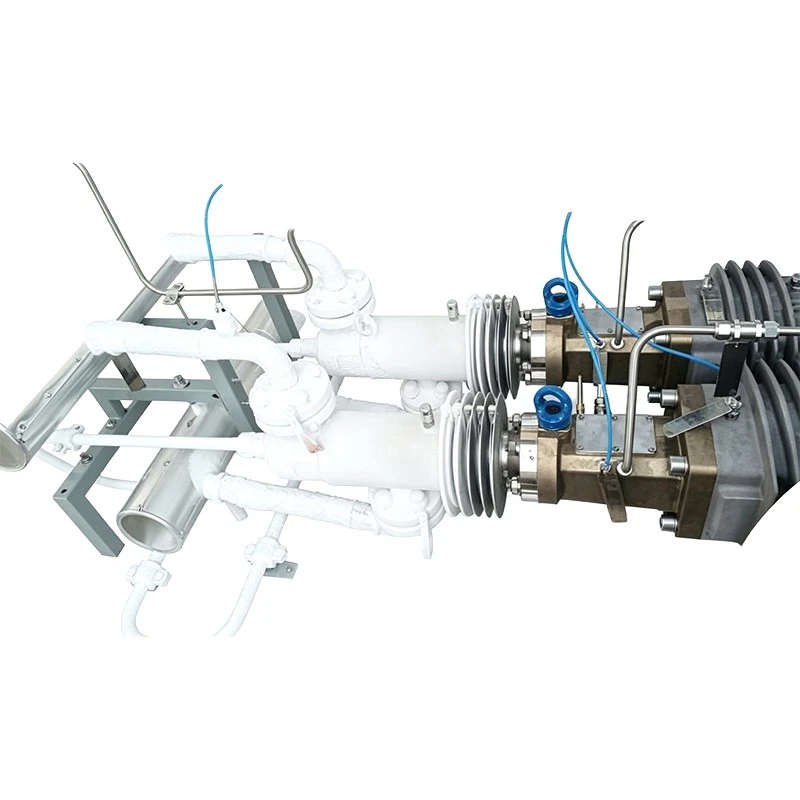
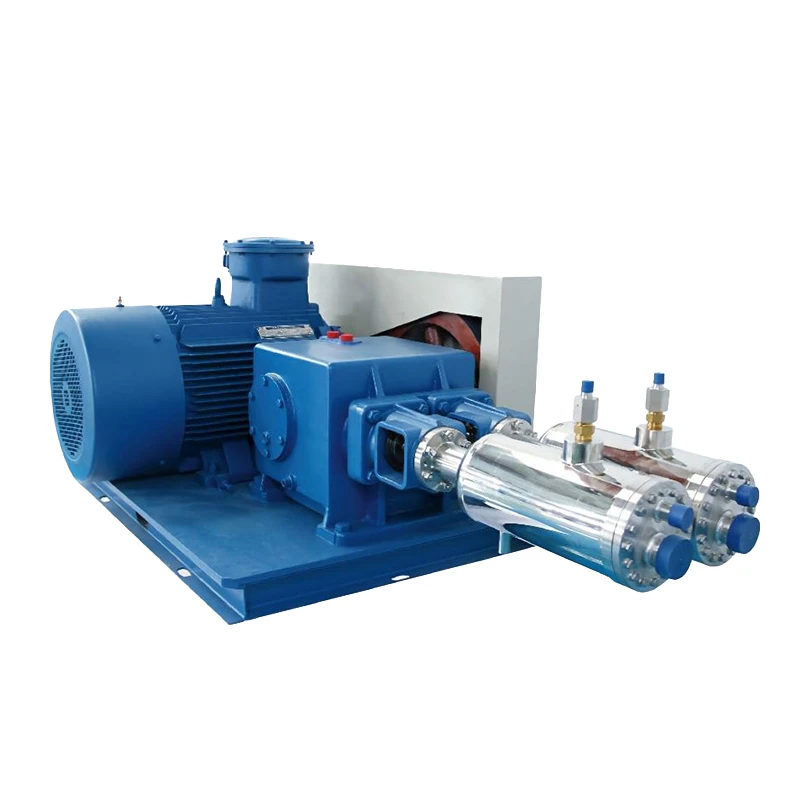
The basic theoretical capacity (let’s call it Qt) is calculated using the area of the piston, the length of the stroke (how far the piston moves in and out), and the number of strokes per minute. The formula looks like this: Qt = A × L × N, where:
- A = area of the piston (π × r², r being radius, easy enough)
- L = stroke length (in feet or meters, just be consistent with units!)
- N = strokes per minute (SPM)
Wait, hold up—most reciprocating pumps on ships are single-acting or double-acting? Single-acting only moves fluid on one side of the piston, so the formula above works as-is. Double-acting pumps move fluid on both sides, so you have to subtract the area of the piston rod (since that rod takes up space on one side, reducing volume) and multiply by 2 for the two sides. That’s a big difference—if you use the single-acting formula for a double-acting pump, you’ll undercalculate capacity by a good chunk, and that’s a problem when you’re counting on moving 500 GPM of ballast.
But here’s the thing: this is theoretical capacity. In the real ship world, you never hit that number exactly. There’s something called volumetric efficiency (ηv) that’s super important. Volumetric efficiency is the ratio of actual capacity (Qa, what the pump is really moving) to theoretical capacity (Qt). Why is it less than 100%? A few reasons:
- Leakage: Fluid slips past piston rings, valves, or seals. On a rocking ship, that leakage can be a little higher because the pump isn’t sitting perfectly level.
- Compressibility: If you’re pumping a fluid that has some gas in it (like fuel with air entrainment) or even a high-pressure fluid (check out High Pressure Reciprocating Pump specs for these), the piston has to compress that gas before it can push fluid out, so you don’t get full volume every stroke.
- Valve lag: The inlet and outlet valves don’t open and close instantly—there’s a tiny delay, so you miss out on a little fluid each stroke.
On ships, volumetric efficiency is usually between 85% and 95%, depending on the pump type and how well it’s maintained. Old pumps with worn rings might drop to 75% or lower, so if your pump is a few years old, don’t rely on the original theoretical number—calculate it with the current efficiency.
Now, let’s throw in ship-specific variables that you won’t see in a land-based pump calculation. First, roll and pitch. When a ship rocks, the pump’s orientation changes slightly. If the pump is mounted in a way that the piston’s stroke is along the axis of the ship’s roll, that can affect how much fluid is drawn in during the suction stroke. For example, if the suction line is a little high or low when the ship pitches, you might get a momentary drop in suction pressure, which can cause vaporization (called cavitation, yikes) and reduce capacity even more. So when calculating, you have to account for the net positive suction head available (NPSHA) on the ship—make sure it’s higher than the net positive suction head required (NPSHR) by your pump. If NPSHA is too low, cavitation will eat into your capacity and damage the pump over time.
Another ship-specific factor: fluid properties. If you’re pumping heavy fuel oil (HFO), it’s way more viscous than water. Viscous fluids flow slower, so it takes longer to fill the cylinder during the suction stroke. That means at higher SPM, you might not get full volume—your actual capacity drops because the pump can’t suck in enough fluid before the next stroke. For water, you might hit 95% efficiency at 100 SPM, but for HFO, it could drop to 80% at the same SPM. So you can’t use the same efficiency number for all fluids on board.
Let’s walk through a quick example to make this concrete, like something a chief engineer would actually do on a cargo ship. Say we have a double-acting reciprocating pump for ballast water:
- Piston diameter: 8 inches (so radius is 4 inches, area A = π × 4² = ~50.27 square inches)
- Piston rod diameter: 1.5 inches (area of rod = π × (0.75)² = ~1.77 square inches)
- Stroke length: 12 inches
- SPM: 60
- Volumetric efficiency: 90% (for clean ballast water, well-maintained pump)
First, calculate theoretical capacity for double-acting: Qt = 2 × (A - A_rod) × L × SPM. Plugging in the numbers: 2 × (50.27 - 1.77) × 12 × 60 = 2 × 48.5 × 12 × 60 = 70,080 cubic inches per minute. Now convert that to GPM (since that’s what ballast systems use): 1 gallon = 231 cubic inches, so 70,080 / 231 = ~303.4 GPM (theoretical). Now actual capacity Qa = Qt × ηv = 303.4 × 0.9 = ~273 GPM. That makes sense for a ballast pump. If this was a single-acting pump, Qt would be 50.27 × 12 × 60 = 36,194 cubic inches per minute, which is ~156.7 GPM theoretical, so actual would be ~141 GPM—half the double-acting number, so you definitely want to know which type you’re working with.
Wait, what if you’re using metric units? Same logic, just use centimeters and meters instead of inches. Piston area is in square cm, stroke in cm, SPM is still strokes per minute, and volumetric efficiency is the same ratio. Easy.
Now, why does all this matter for you, the ship’s crew? If you miscalculate capacity, you might end up with a pump that’s too small—so transferring ballast takes twice as long, delaying port operations, or you can’t get enough fuel oil during bunkering, which is a safety hazard. Or if it’s too big, you’re wasting fuel running a pump that can move way more than you need, adding to operating costs. Also, on older ships, if you’re replacing a reciprocating pump, you need to match the capacity exactly to keep the piping system working—too big and you’ll get pressure spikes that damage hoses or valves.
As someone who’s been in the Reciprocating Pump in Ship game for years, I’ve seen guys skip the volumetric efficiency step and then wonder why their pump can’t keep up in rough seas. I once worked with a chief mate on a container ship who thought his 500 GPM pump was broken because it only moved 420 GPM in a storm—turns out he used theoretical capacity instead of real efficiency, and the ship’s roll added a little extra leakage. Once we adjusted the calculation to include the 85% efficiency (lower because of rough seas) and accounted for the 5% extra leakage, it all lined up. That’s why it’s not just math—it’s understanding how the ship’s environment changes the numbers.
Another thing to remember: reciprocating pumps have a rated capacity, usually given by the manufacturer, but that’s under ideal conditions. When you’re operating in actual ship conditions—different fluid, varying sea state, worn parts—you need to tweak that rated number. If you’re dealing with harsh chemicals or cryogenic fluids, check our Cryogenic Reciprocating Pump page for specs that account for those unique conditions, because regular pumps won’t handle cold temps or aggressive fluids without efficiency drops. High-pressure applications, like pumping water for boiler feed, have their own formulas too, since pressure affects how the valves operate and how much fluid the pump can move.
Let’s wrap up the key steps to calculate capacity on a ship, so you don’t have to flip through a manual mid-operation:
- Confirm your pump type: single-acting or double-acting. This changes the theoretical capacity formula big time.
- Get the core specs: piston diameter, stroke length, SPM, piston rod diameter (for double-acting).
- Calculate theoretical capacity using the right formula for your pump type.
- Find your volumetric efficiency: 85-95% for well-maintained pumps with clean fluids, lower if your pump is old or handling viscous/gassy fluids, plus adjust for sea state (rough seas = a little lower efficiency).
- Account for NPSHA: make sure suction pressure is enough to avoid cavitation, which kills capacity fast.
- Check fluid viscosity: thick fluids mean slower suction, so lower efficiency at higher SPM.
And hey, if you’re not sure about any of this—whether you’re spec’ing a new pump, replacing an old one, or troubleshooting a slow pump—we’re here to help. We specialize in Reciprocating Pump in Ship setups, so we can walk you through the exact calculations for your specific system, or help you pick a pump that matches your capacity needs perfectly. No guesswork, just solid numbers tailored to ship operations.
Just to make sure we’re clear: this isn’t a one-size-fits-all. Every ship’s pump room is a little different, every fluid has unique properties, and sea conditions vary. That’s why taking the time to do these steps (instead of just going by the manufacturer’s rating) will save you from headaches down the line. I’ve been doing this long enough to know that a little extra calculation now beats a delay in port or a broken pump at 2 a.m. in the middle of the ocean.
References
- US Maritime Administration. (2018). Marine Auxiliary Machinery: Pumps and Pumping Systems. U.S. Department of Transportation.
- Karassik, I. J., et al. (2014). Pump Handbook (5th ed.). McGraw-Hill Education.
- American Bureau of Shipping. (2021). Rules for Building and Classing Steel Vessels: Chapter 3 – Machinery Installations. ABS Group.