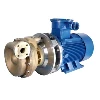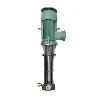
"Air binding" in a centrifugal pump refers to a condition where, following startup, the presence of a significant amount of air within the pump casing and impeller prevents the generation of the necessary liquid flow and pressure, thereby rendering the pump unable to properly draw in and transport the liquid. Centrifugal pumps rely primarily on the centrifugal force generated by the rotating impeller to function; however, because the density of air is far lower than that of the liquid, the impeller struggles to generate sufficient pressure on the air, even at high rotational speeds. Consequently, while the motor may operate normally, virtually no liquid is discharged from the pump outlet.
Air binding typically occurs when the pump has not been fully primed (filled with liquid) prior to startup, when there is an air leak in the suction piping, or when air has accumulated inside the pump. If the pump operates in an air-bound state for an extended period, liquid fails to enter the casing, depriving internal components of adequate cooling and lubrication. The mechanical seal may overheat due to the lack of liquid lubrication, potentially leading to seal damage and equipment failure. Therefore, it is essential to ensure that both the pump casing and the suction piping are completely filled with the pumped medium before starting the pump.
To determine whether air binding has occurred, one can observe changes in the pump's discharge pressure and flow rate. If the motor runs normally after startup but discharge pressure fails to build and there is no flow, the presence of air inside the pump should be suspected. Remediation typically involves stopping the pump, re-priming and venting it, and inspecting the suction piping, flanges, valves, and seals for air leaks. Once it is confirmed that the air has been purged and the casing is filled with liquid, the pump should be restarted according to the correct operating procedures.
It is important to note that air binding and cavitation are distinct phenomena. Air binding is primarily caused by the presence of air within the pump, preventing the establishment of pressure and flow. Cavitation, on the other hand, usually results from excessively low inlet pressure, causing the liquid to vaporize locally and form bubbles; these bubbles subsequently collapse, creating an impact force on the impeller. While both phenomena impair the pump's normal operation, their causes and remedies differ. In practice, proper priming, venting, and inspection of suction piping seals can effectively minimize the occurrence of air binding.