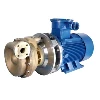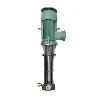
Filling pumps are primarily used to transfer liquid from a storage container to specific equipment or piping, providing the necessary power and flow control during the filling process. Upon startup, the motor drives the rotation of the impeller or other internal components, creating a pressure differential within the pump chamber. Driven by this pressure difference, liquid enters the pump through the inlet and is discharged to the target location, thereby completing the transfer process.
During operation, the liquid's flow rate and pressure are influenced by factors such as pump speed, pipeline resistance, and inlet/outlet pressures. Under normal conditions, the pump establishes stable discharge pressure upon startup, ensuring continuous liquid flow through the pipeline. If the system is equipped with valves, flow meters, or pressure control devices, the filling speed and volume can be adjusted as needed to ensure greater stability and accuracy.
Selecting the appropriate filling pump model requires consideration of the properties of the medium being transferred and the operating environment. Before startup, verify that pipeline connections are secure and that the pump casing contains sufficient liquid to prevent prolonged dry running. If issues such as reduced flow, abnormal pressure, or increased noise arise during operation, the pump, piping, and associated valves should be inspected promptly to prevent equipment failure. Proper operation and regular maintenance ensure stable pump performance and extend the equipment's service life.