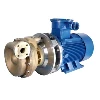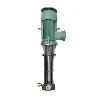
As industrial demands for high pressure, precise fluid transfer, and equipment stability continue to rise, reciprocating pumps retain significant potential for future development. Currently, these pumps are widely used in sectors such as petroleum, chemicals, water treatment, and power generation; future products will place greater emphasis on operational efficiency and reliability. Their inherent structural characteristics offer distinct advantages, particularly in high-pressure fluid transfer and precision metering applications.
Energy conservation and consumption reduction will be key directions for the evolution of reciprocating pumps. Traditional models often suffer from issues such as mechanical friction and pressure fluctuations; consequently, future designs will aim to minimize energy loss by optimizing pump structures, improving plunger and valve designs, and adopting more efficient drive systems. Furthermore, adjusting operating speeds and flow rates in response to actual production loads prevents the equipment from operating under suboptimal conditions for extended periods, thereby lowering operating costs.
Intelligent technology represents another clear trend in the future of reciprocating pumps. The installation of sensors to monitor pressure, temperature, vibration, and flow allows for real-time assessment of operational status and enables control systems to adjust operating parameters dynamically. Early warning systems can alert operators to issues such as abnormal pressure, seal wear, or excessive vibration, thereby reducing the incidence of unexpected shutdowns. Advances in the Internet of Things (IoT) and predictive maintenance technologies will facilitate a shift from reliance on manual inspections to online monitoring and condition-based maintenance.
The application of new materials and manufacturing processes will further extend the service life of reciprocating pumps. To handle high temperatures, high pressures, corrosive substances, and media containing particulates, future designs will increasingly utilize wear-resistant, corrosion-resistant, and high-strength materials, alongside improvements to sealing structures and the design of wear-prone components. Overall, the future development of reciprocating pumps will focus on high efficiency, energy conservation, intelligent control, high-pressure and corrosion resistance, and extended service life, with their scope of application expanding alongside growth in sectors such as water treatment, new energy, chemicals, and high-end manufacturing.