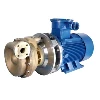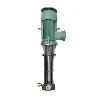
The performance of a centrifugal pump is typically characterized by parameters such as flow rate, head, power, and efficiency. Flow rate refers to the volume of liquid the pump can transport per unit of time, usually expressed in cubic meters per hour or liters per minute. Head represents the energy the pump imparts to the liquid, which can be understood as the pressure and elevation difference the pump can overcome. Flow rate and head are critical parameters when selecting a centrifugal pump; appropriate ranges must be determined based on actual piping configurations and production requirements.
Pump power primarily encompasses shaft power and motor power. During operation, the pump consumes electrical energy; the motor drives the impeller to rotate, thereby transferring mechanical energy to the liquid. Generally, higher flow rates and greater heads require higher power output. If the motor power selected is too low, the equipment may fail to meet normal operational requirements; conversely, if the power is excessive, it leads to energy waste. Therefore, the motor power must be reasonably matched to the pump's actual operating parameters.
Efficiency is another key indicator of centrifugal pump performance, representing the proportion of input energy effectively converted into energy for the liquid. A pump's efficiency is not constant; it varies with operating conditions, such as flow rate and head. Typically, efficiency is highest when the pump operates near its design point. Prolonged operation far from the design point can result in reduced efficiency, increased energy consumption, and heightened vibration and noise. Consequently, in practical application, the pump should be maintained within a reasonable operating range.
Centrifugal pump performance also encompasses cavitation characteristics, operational stability, vibration, and noise levels. Cavitation performance is primarily linked to suction conditions; if the inlet pressure is too low, the liquid may vaporize and form bubbles, potentially damaging the impeller surface. A high-quality centrifugal pump should exhibit stable operation, with vibration and noise levels remaining within acceptable limits during normal use. In summary, the overall performance of a centrifugal pump is determined by a combination of transport capacity, pressure capability, energy consumption, efficiency, and operational stability; only when these parameters are properly balanced can the equipment ensure safe, reliable, and long-term operation.