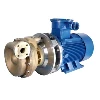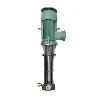
The fundamental operating principle of a high-pressure pump involves using mechanical energy to pressurize a liquid-imparting high pressure and velocity to it-and then transporting it through piping to a designated location. During operation, the motor converts electrical energy into mechanical energy, driving internal components such as impellers, plungers, or gears via a drive shaft. Liquid enters the pump body through the inlet, undergoes a continuous pressure increase driven by these internal components, and is finally discharged through the outlet. In this way, high-pressure pumps provide stable power to equipment and systems requiring high-pressure fluid.
Different types of high-pressure pumps employ distinct pressurization methods. Centrifugal high-pressure pumps rely primarily on the high-speed rotation of an impeller to generate centrifugal force, accelerating the liquid; flow channels within the pump body then convert a portion of this kinetic energy into pressure energy. Plunger pumps, conversely, utilize the reciprocating motion of a plunger within the pump chamber; changing the chamber's volume facilitates the intake and discharge of liquid. Plunger pumps typically generate higher pressures and offer easier flow rate control, making them widely used in applications such as high-pressure cleaning, hydraulic systems, and industrial pressurization.
During operation, a specific relationship exists between the pump's flow rate and pressure. Factors such as rotational speed, the design of the impeller or plunger, the configuration of inlet and outlet piping, and the properties of the pumped medium all influence performance. High pipeline resistance requires the pump to generate higher pressure to ensure effective fluid transport, while excessive operating speeds can increase energy consumption and equipment wear. Therefore, selecting the appropriate pump model based on system pressure and flow requirements-and operating the equipment within an optimal range-is essential for practical application.
To ensure safe and stable operation, high-pressure pump systems are typically equipped with pressure gauges, safety valves, filters, and control mechanisms. Pressure gauges allow for real-time monitoring of system pressure; safety valves provide protection against over-pressurization; and filters minimize the entry of impurities into the pump body, thereby reducing wear on internal components. Through the coordinated interaction of the pump body, power system, piping, and protective devices, the high-pressure pump continuously performs fluid intake, pressurization, and transport, meeting the high-pressure fluid demands of industrial production and equipment operation.