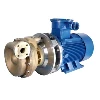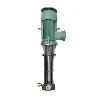
The design of a high-pressure pump must first meet the specific requirements for liquid pressure and flow rate in actual production; while ensuring adequate pumping capacity, the stability and safety of the equipment's operation must also be considered. During the design phase, the pump's overall structure and key parameters are determined based on factors such as the pumped medium, operating pressure, flow rate, temperature, and the operating environment. Rather than simply pursuing high pressure, the design should ensure a balanced match between pressure, flow rate, and motor power, enabling stable operation under normal conditions and avoiding prolonged overloading.
Design efforts must focus on the performance of critical components, such as the pump casing, impeller or plunger, shaft, bearings, and sealing system. Given the high-pressure operating conditions, the casing and internal parts require sufficient strength and wear resistance, while energy losses during fluid transport must be minimized. For high-speed pumps, dynamic balancing of the rotor is essential to reduce vibration and noise during operation. Sealing structures must be carefully designed to prevent leakage and ensure long-term, reliable operation.
Energy efficiency is another crucial consideration in high-pressure pump design. While meeting pressure and flow requirements, the design should maximize operating efficiency and minimize energy losses in the motor and mechanical transmission systems. For instance, optimizing the geometry of impellers, flow passages, or plungers can enhance fluid transport efficiency, and selecting a motor with the appropriate power rating based on actual load requirements can further improve performance. In systems with significant fluctuations in operating conditions, variable frequency drives (VFDs) can be employed to adjust the pump's operating state in real-time, preventing unnecessary, prolonged high-load operation.
Finally, the design must address equipment safety, ease of maintenance, and service life. Essential safety devices-such as pressure protection systems, safety valves, and pressure gauges-should be installed to provide timely protection against abnormal system pressures. Structural design should facilitate future inspections, repairs, and component replacements, thereby simplifying maintenance. In summary, the design philosophy for high-pressure pumps centers on safety, reliability, stable pressure, high efficiency, energy conservation, and ease of maintenance; through the rational design of structure, materials, and control systems, the equipment can meet the demands of diverse industrial production environments.