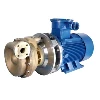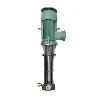
A filling pump is a device used to transport and dispense liquid media; its structure typically comprises a power unit, a pumping unit, a sealing unit, and control and auxiliary components. While specific structural details vary by type-for instance, the core components differ between gear pumps, vane pumps, piston pumps, and centrifugal pumps-the fundamental operating principle remains the same: utilizing mechanical motion to generate a pressure differential that draws liquid from the reservoir into the pump body and subsequently delivers it to the target location at a specified flow rate and pressure. Key components of a filling pump include the motor, pump body, rotor or impeller, drive shaft, seals, inlet and outlet piping, and control devices.
1. Motor
The motor serves as the primary power source for the filling pump, converting electrical energy into mechanical energy to drive the pump's internal working components. Upon startup, the motor shaft rotates, transmitting power-via a coupling, drive shaft, or other transmission mechanism-to the internal rotor, impeller, or gears. Motor speed directly influences the pump's operating efficiency and delivery capacity; generally, within a certain range, a higher speed results in an increased flow rate. However, excessive speed can lead to over-pressurization, increased vibration, and accelerated component wear. Therefore, the appropriate motor must be selected based on the specific medium being transported and the equipment's operational requirements.
2. Pump Body
The pump body constitutes the main structure of the filling pump, housing the internal space where liquid flows and pressurization occurs, while also serving as the mounting point for other components. Typically equipped with an inlet and an outlet, the pump body allows liquid to enter the pump chamber, where it gains pressure through the action of internal components before being discharged through the outlet. Material and structural choices for the pump body depend on the medium being transported; for example, metal materials are suitable for standard oils, whereas corrosive liquids require corrosion-resistant materials. Manufacturing precision regarding the pump body also affects sealing performance and operational stability; excessive internal clearances can lead to liquid backflow, thereby reducing filling efficiency.
3. Rotor, Impeller, or Gear
The rotor, impeller, or gear is a critical component in a filling pump that directly participates in fluid transport and plays a key role in generating pressure and flow. Working components vary depending on the pump type. Impeller-type filling pumps achieve fluid transport by rotating the impeller at high speeds, subjecting the fluid to centrifugal force and imparting energy to it. Gear-type filling pumps utilize the rotation of two or more gears to draw fluid into the working chambers between the gears and continuously convey it to the outlet. Plunger pumps rely on the reciprocating motion of a plunger to alter the pump chamber volume, thereby facilitating fluid intake and discharge. Since these components are in constant contact with the fluid and undergo continuous motion, they must meet specific requirements regarding material strength, machining precision, and wear resistance.
4. Drive Shaft and Coupling
The drive shaft is primarily responsible for transmitting power from the motor to the pump's internal working mechanism. When the motor operates, its shaft rotates and-connected to the pump's drive shaft via a coupling-drives the synchronous movement of the impeller, gears, or other working components. In addition to power transmission, the coupling can compensate for minor installation misalignments between the motor shaft and the pump shaft. Improper installation of the drive shaft or wear on the coupling can lead to vibration and noise during operation; in severe cases, it may damage bearings and seals. Consequently, the installation precision of the drive system significantly impacts the stable operation of the filling pump.
5. Sealing Device
The sealing device serves primarily to prevent fluid from leaking out of the pump body and to stop external air from entering it. Common sealing components include mechanical seals, sealing rings, and oil seals. As the filling pump operates, the drive shaft rotates continuously, necessitating a reliable sealing structure between the shaft and the pump body. Effective sealing minimizes fluid leakage and ensures normal equipment operation; conversely, if seals age, wear out, or are installed incorrectly, issues such as oil or fluid leakage may occur. These problems not only compromise filling performance but can also lead to equipment contamination and safety hazards. Therefore, despite their relatively small size, sealing devices are vital components of filling pumps. 6. Bearings
Bearings are primarily installed at the support points of the drive shaft to reduce friction during rotation and ensure smooth shaft operation. During the filling pump's operation, the motor and the internal shaft rotate continuously at high speeds, subjecting the bearings to specific radial and axial loads. Issues such as abnormal noise, vibration, and temperature rise can easily occur if bearings are insufficiently lubricated, severely worn, or improperly installed. Therefore, regularly inspecting bearing lubrication and operating status is a crucial part of filling pump maintenance.
7. Inlet and Outlet Ports
The inlet and outlet ports are critical connection points between the filling pump and external piping. The inlet draws liquid into the pump body, while the outlet delivers pressurized liquid to the target equipment or pipeline. The dimensions, orientation, and connection methods of these ports must align with the overall filling system. Problems such as blockages, excessive bends, or poor sealing in the inlet piping can hinder liquid intake or even cause the pump to run dry (cavitate). Similarly, excessive resistance in the outlet piping can impair the pump's normal operation. Thus, the proper design of inlet and outlet piping is essential for ensuring optimal pump performance.
8. Filters
Filters are vital auxiliary components of filling pumps, typically installed upstream of the pump inlet to remove impurities, particulates, and foreign matter from the liquid. For fluids like fuel or lubricating oil, the ingress of impurities into the pump body can cause wear on gears, impellers, or other precision parts, and in severe cases, lead to blockages. Consequently, filters require regular inspection and cleaning during operation. A clogged filter increases suction resistance and reduces flow rate; therefore, filter maintenance must not be overlooked.
9. Control Devices
Control devices regulate the filling pump's startup, shutdown, and operating status. While simple pumps may rely on basic switches, highly automated systems often incorporate pressure sensors, flow meters, controllers, and variable frequency drives (VFDs). These devices allow for the adjustment of operating speed and filling flow rate based on actual requirements and enable the equipment to shut down automatically in the event of abnormal pressure, overload, or other issues. This not only improves the accuracy of the filling process but also reduces the likelihood of equipment failure.