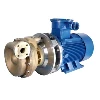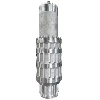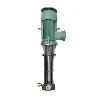
A turbo-expander is a mechanical device that performs work by utilizing the energy generated during the expansion of high-pressure gas; it is primarily used for gas expansion, pressure reduction, and refrigeration. During operation, high-pressure gas enters the expander and drives the impeller to rotate at high speed; as the gas expands, its pressure and temperature drop, and a portion of its internal energy is converted into mechanical energy. Characterized by high expansion efficiency and stable continuous operation, turbo-expanders are widely used in equipment for cryogenic refrigeration and gas separation.
The basic structure of a turbo-expander comprises components such as the volute casing, nozzles, impeller, rotor shaft, bearings, and sealing systems. High-pressure gas enters the unit and accelerates as it passes through the nozzles; the high-speed gas stream then impinges upon the impeller, causing both the impeller and the rotor shaft to spin rapidly. The gas continues to expand within the impeller-undergoing a drop in pressure and temperature-before finally exiting the unit. The impeller is the core component of the turbo-expander; its structural design and manufacturing precision directly influence the device's expansion efficiency and operational stability.
Turbo-expanders find application across numerous industrial sectors, particularly in air separation, natural gas processing, liquefied natural gas (LNG) facilities, and various cryogenic refrigeration systems. For instance, in air separation units, turbo-expanders are used to lower air temperature, creating the cryogenic conditions necessary for subsequent liquefaction and gas separation. In natural gas processing, they harness the energy released during the pressure drop to simultaneously reduce gas temperature, thereby facilitating downstream component separation and processing.
Compared to conventional throttling devices, turbo-expanders offer superior energy efficiency because they recover a portion of the energy during the gas pressure-reduction process. However, the high-speed rotation of the internal impeller and rotor shaft imposes stringent requirements on manufacturing precision, bearings, seals, and lubrication systems. Safe and stable long-term operation depends on strictly controlling inlet and outlet pressures, temperatures, and rotational speeds, alongside rigorous periodic inspection and maintenance.