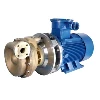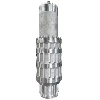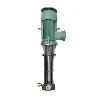
A turbo-expander is primarily composed of a casing, nozzles, an impeller, a rotor shaft, bearings, sealing devices, and inlet/outlet piping. Its overall structure is designed around the process of gas expansion to perform work: high-pressure gas enters the unit, accelerates through the nozzles, drives the impeller and shaft to rotate, and finally exits the machine. While specific structural details may vary across different types of turbo-expanders, their fundamental components and operating principles are similar; the impeller, rotor shaft, and bearings are among the critical internal components.
The casing serves to create the flow path for the gas while supporting and protecting internal components. Upon entering the casing, the high-pressure gas travels through the nozzles and impeller along a designated flow path. Nozzles are typically positioned upstream of the impeller; their primary function is to convert the gas's pressure energy into kinetic energy, allowing the gas to enter the impeller at high velocity. The design and installation angle of the nozzles influence the flow characteristics as the gas enters the impeller, thereby significantly affecting the turbo-expander's operating efficiency.
The impeller and rotor shaft form the rotor assembly, which is the core structure responsible for the expansion and work-extraction process. High-speed gas flow exerts force on the impeller blades, driving the rotation of both the impeller and the shaft. As the gas expands further within the impeller, it releases energy-resulting in a drop in pressure and temperature-while converting a portion of that energy into mechanical energy. To ensure rotor stability during high-speed operation, bearings support both ends of the shaft, and precise dynamic balancing is performed to minimize operational vibration.
Sealing devices are primarily located at the interface between the rotor shaft and the casing to minimize gas leakage and prevent the ingress of external gases. Depending on operating conditions, various sealing configurations may be employed, such as labyrinth seals, mechanical seals, or other types. Bearings support the high-speed rotating shaft and reduce friction during rotation. Additionally, the turbo-expander is equipped with lubrication and cooling systems, as well as pressure and temperature monitoring devices, to track the unit's operating status. Through the coordinated interaction of these components, the turbo-expander operates stably at high speeds while performing the functions of gas expansion, pressure reduction, cooling, and energy recovery.