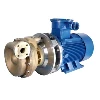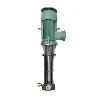
The fundamental principle of a turbo-expander is to utilize the energy released during the expansion of high-pressure gas to drive the rotation of an impeller, thereby reducing the gas's pressure and temperature while recovering a portion of mechanical energy. Upon entering the expander, the high-pressure gas first passes through a nozzle, which converts the gas's pressure energy into kinetic energy (velocity), allowing the flow to enter the impeller at high speed. As the high-speed gas stream strikes the impeller blades, it drives the impeller and shaft to rotate rapidly, causing the gas to lose energy continuously.
After entering the impeller, the gas flows along the path defined by the blades, continuing to expand as it moves. As the gas pressure drops, its temperature falls correspondingly, and a portion of its internal and pressure energy is converted into mechanical energy at the impeller. The impeller absorbs this energy to drive the shaft; if the shaft is connected to a generator, compressor, or other equipment, this mechanical energy can be further utilized, thereby enhancing the overall system's energy efficiency.
High-speed rotor rotation is a critical aspect of the turbo-expander's operation. To ensure stable rotor performance, the equipment is typically equipped with bearings and sealing systems that monitor and control parameters such as rotor speed, vibration, and inlet/outlet pressures and temperatures. After passing through the impeller, the gas exits the unit; by this stage, it has undergone significant expansion, resulting in lower pressure and temperature compared to the inlet conditions. Precise control of intake volume and operating parameters allows the expander to maintain optimal working conditions.
In essence, a turbo-expander lowers gas pressure and temperature by harnessing the work performed during gas expansion. A key distinction between a turbo-expander and a standard throttle valve is that the expander generates usable mechanical work during the expansion process, rather than simply reducing pressure through throttling. Consequently, turbo-expanders are widely used in fields such as air separation, natural gas liquefaction, cryogenic refrigeration, and natural gas processing. Operational efficiency depends on factors such as impeller design, gas flow rate, inlet/outlet pressures, and rotational speed; actual operation requires appropriate adjustments based on specific working conditions.